Yazd
- Iran's oldest inhabited city
- situated in central Iran at 1230 meters
- Iran's largest community of Zoroastrians
- famous for carpet weaving, silk production and delicious sweets
- known for its bagdirs - wind towers
- also known as Yezd
- ancient desert location on the Silk Road
- visited by Marco Polo
- population over 450,000
- capital of Yazd province
Yazd [Yezd]
History
Originally founded in the Sassasian period (AD 224-637), Yazd's heyday as a commercial and trading city was in the 14th and 15th centuries, followed by a subsequent decline. The railway from Tehran only reached the town in the days of the last Shah.
The ancient city of Yazd (یزد,) can lay claim to being one of the oldest, continuously inhabited places on earth. Rising out of the desert, the winding alleys and high mud walls of the houses of the town are straight out of the pages of a fairy tale.
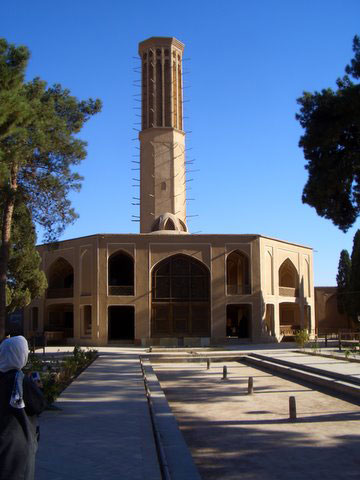
Yazd is famous for its ancient ventilation system of badgirs (windtowers), designed to catch even the faintest of breezes and channel them to the buildings below. Yazd is also famous for its skilled qanat or water-channel diggers and the Yazd Water Museum pays homage to their ingenuity.
Jameh Mosque
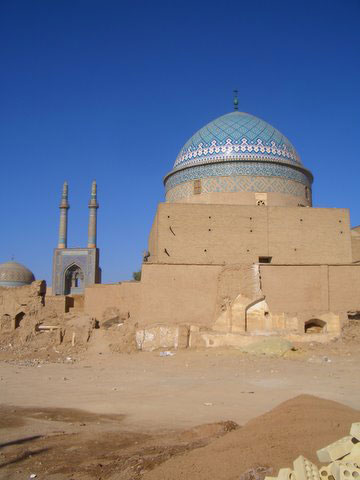
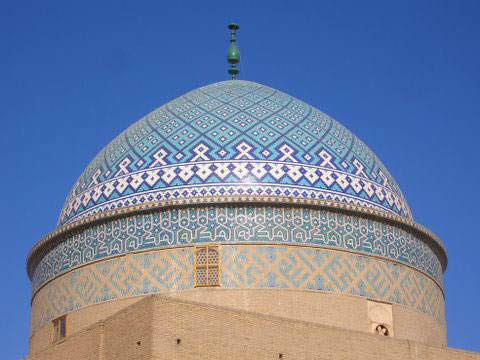
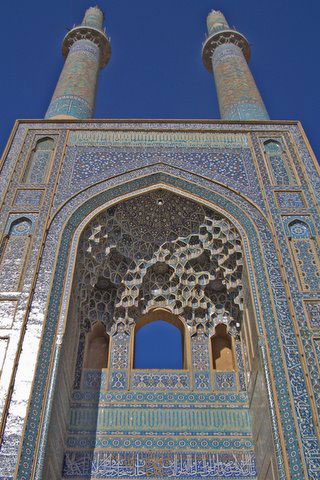
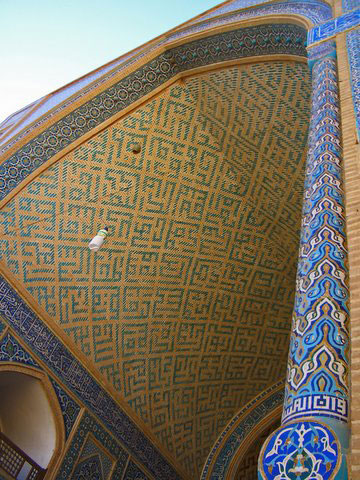
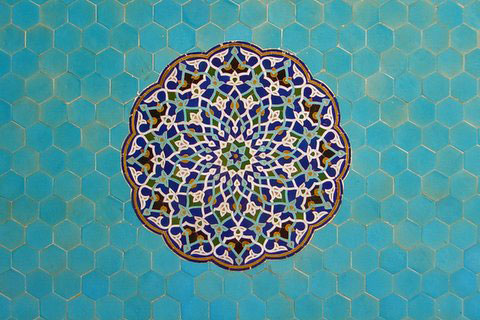
Yazd's most famous sight is the Jameh Mosque (Friday Mosque), an exquisite 14th century building with soaring 48-meter high minarets and a mosaic-decorated dome. The mosque is believed to have been built on an earlier 12th century Zoroastrian temple.
The unusual Amir Chakhmaq Complex pushes the Jameh Mosque as Yazd's must-see sight. Built in the 13th century the softly-rounded sunken alcoves form the facade of a takieh, a religious building used to perform the Ashura rituals to commemorate the martyrdom of the Imam Hossein (the third of the twelve successors to Mohammed, according to Shiite Muslims).
The building is floodlit at night and there are wonderful views of the town and the surrounding desert landscape from the third-storey. There is also a huge wooden palm leaf-shaped nakhl - used in the Ashura rituals to carry a representative martyr of the imam decked with swords, money and mirrors outside the building.

Bogheh-ye Seyed Roknaddin
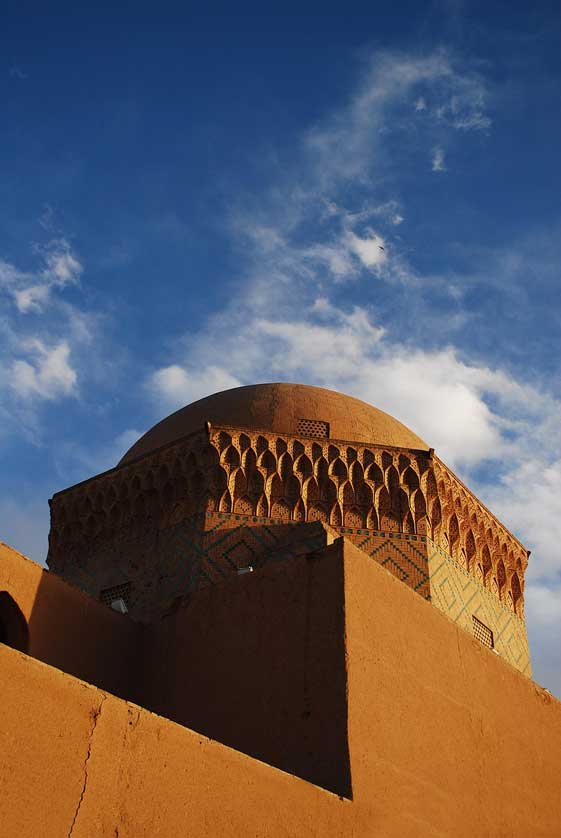
Yazd's other places of interest include the nearby Bogheh-ye Seyed Roknaddin (Tomb of Seyed Roknaddin) with its striking blue-tiled dome, the so-called Alexander's Prison - a 15th century domed school building with a well in its courtyard, said to have been built by Alexander the Great and used as a dungeon. The Khan-e Lari is the well-preserved ex-home of a local merchant with traditional architecture and stained glass windows.
The Bagh-e Doulat Abad is an 18th century garden pavilion that belonged to the former shah, Karim Khan Zand, noted for its beautiful stained-glass windows and intricate lattice work.
Ateshkadeh Fire Temple
Yazd has long been a center of the Zoroastrian faith and the Ateshkadeh Fire Temple is said to preserve a flame that has been burning continuously since 470 CE.
In the outlying southern suburbs of town are a pair of defunct Zoroastrian Towers of Silence, where the bodies of believers were once left to the vultures after death. To find out more about Zoroastrianism, visit the Zoroastrian Museum of History and Culture in Yazd.

Accommodation in Yazd
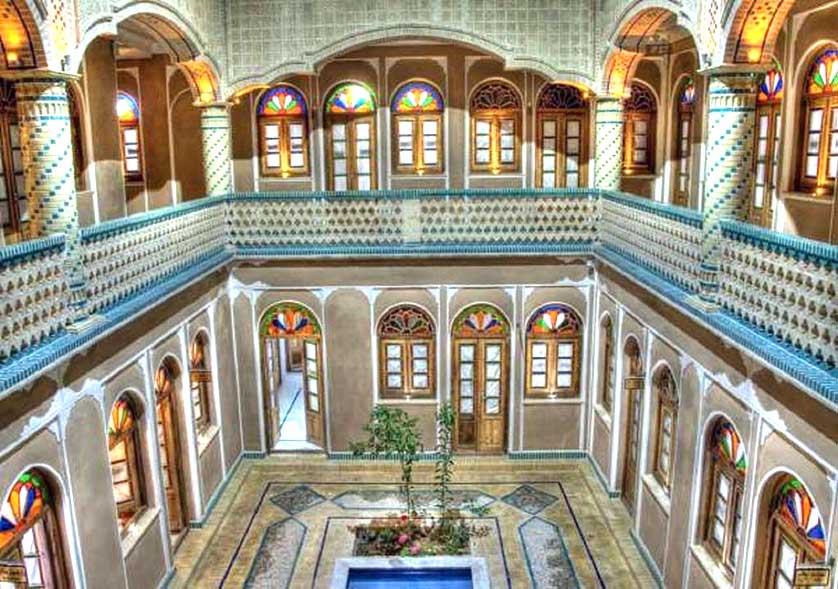
Hotels in Yazd include the two star Silk Road Hotels, the three star Mozaffar Traditional Hotel, the Fazeli Hotel Yazd, also three star and housed in a traditional building with stained glass and the four star Dad Hotel.
Access - how to get to Yazd
Yazd has daily Iran Air flights to Tehran (70 minutes) and twice-weekly departures to Mashhad.
There are buses to Tehran (10 hours), Esfahan (5 hours), Kerman (6 hours), Bam (9 hours), and Shiraz (7 hours).
There are daily trains from Yazd station, next to the main bus station in Rah Ahan Square in the south of the city, to Tehran (approx 8 hours). The overnight trains depart for Tehran, via Kashan and Qom. There is also a daily train to Bandar-e Abbas (9-10 hours).
Will Yong and Kazem Vafadari

Book Hotel Accommodation in Iran
Hotels in Iran - Booking.com
Hotels in Tehran - Booking.com
Hotels in Esfahan - Booking.com
Hotels in Kish - Booking.com
Hotels near Imam Khomeini International Airport (Mahmudabad)
Hotels in Mashhad - Booking.com
Hotels in Shiraz - Booking.com
Hotels in Yazd - Booking.com
Book Hotel Accommodation in The Middle East
Hotels in Dubai & UAE - Agoda
Hotels in Egypt - Agoda
Hotels in Jordan - Agoda
Hotels in Kuwait - Agoda
Hotels in Lebanon - Agoda
Hotels in Qatar - Agoda
Hotels in Saudi Arabia - Agoda