Qazvin
- close to the fortress city of the Assassins in Alamut
- situated at the foot of the Alborz mountains
- 165 km northwest from Tehran
- population 342,000; altitude 1800 meters
Located northwest from Tehran, the historic city of Qazvin (شهر ری) is the capital of Qazvin province. Known for its famous carpets, Qazvin is the jumping-off point for a visit to the fortresses of the Assassins in Alamut, 30km away.
History
Founded in the Sassanian period in the 3rd century by Shapur II, Qazvin was briefly the Persian Safavid capital in the mid-16th century before the court moved to Esfahan. In between these two eras of prominence, the city was taken by invading Arab forces in 644 AD and ravaged by the Mongols in the 13th century. Situated on the strategic road between Tehran and the Caspian Sea, the city has long been fought over and Qazvin was occupied by the Russians during World Wars I and II. The city's long history means there is much of archeological interest in the area.
Attractions & Sights in Qazvin
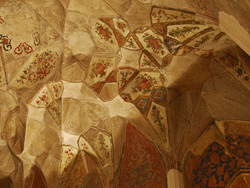
Little remains from the period when Qazvin was Persia's capital, though the Chehel Sotun predates this period and was used as a Safavid royal palace. The building, with a large pool at its front, was built in 1510 and is located in what is now the town's central park. Chehel Sotun is attractively floodlit at night. The name Chehel Sotun means "Forty Columns" and refers to the reflection of the 20 wooden pillars of the building in the pool, which seems to double their number. The interior has a number of fine frescoes and paintings and also contains a recent calligraphy museum (Tel: 0281 223 3320).
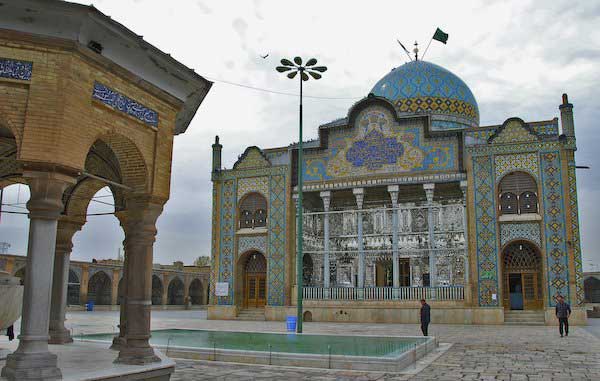
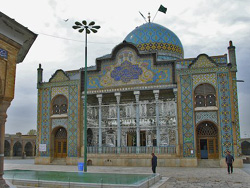
The Imamzadeh Hossein shrine commemorates Hossein, a son of Imam Reza (765-818), the seventh descendant of the prophet Muhammad and dates from the 16th century. The facade is from the Qajar period and the building is topped by a fine blue dome with a fountain pool at the front.
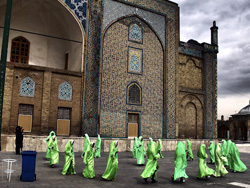
Jameh Mosque
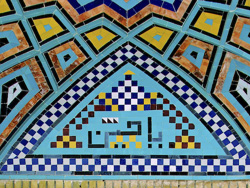
The Jameh Mosque, said to be built over a Zoroastrian fire temple, dates from around the 10th century or earlier, has been remodeled over the ages and has a beautiful blue dome and interior relief calligraphy. The al-Nabi Mosque is from the Qajar period (1794-1925) with four large iwans in its courtyard.
Qazvin Museum
The modern Qazvin Museum (Tel: 0281 223 4935) displays both modern art and ancient ceramics from Alamut.
Little remains of Qazvin's once proud city walls except for the Tehran Gate, the Rah Kushk Gate on Nadari Street and the Ali Qapu Gate. Domed water cisterns, cooled by wind towers include the Sardar cisterns and the Haji Kazem Cistern, but are not open to the public.
A few Russian-built buildings dot the city, vestiges of the brief Russian occupations in the the 20th century. These include the Kantur Church and the present Mayor's office (formerly a Ballet Hall).
Access - Getting To Qazvin
There are frequent buses from Qazvin to Tehran (2 hours, 30 minutes-3 hours) with fewer buses to Hamadan (3 hours, 30 minutes), Kermanshah (7 hours), Rasht (3 hours) and Mashhad.
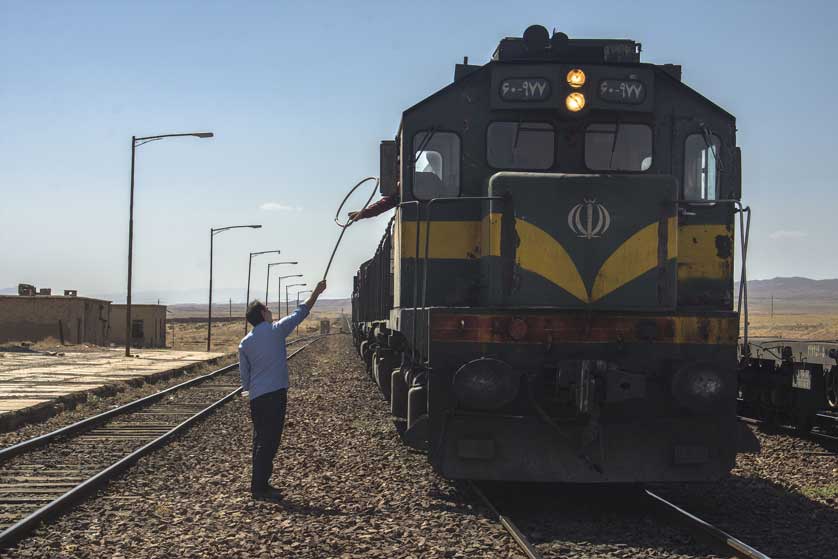
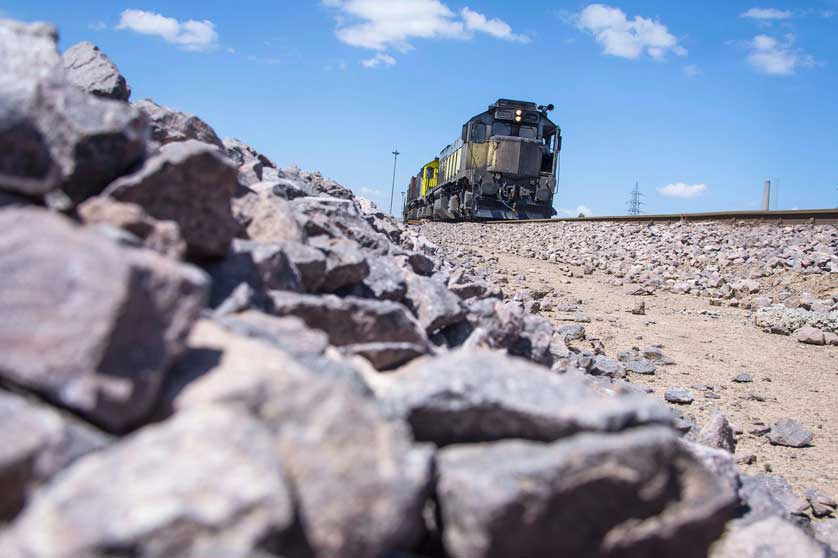
There are also trains to Tehran, Zanjan, Tabriz and Mashhad.
Will Yong
Book Hotel Accommodation in Iran
Hotels in Iran - Booking.com
Hotels in Tehran - Booking.com
Hotels in Esfahan - Booking.com
Hotels in Kish - Booking.com
Hotels near Imam Khomeini International Airport (Mahmudabad)
Hotels in Mashhad - Booking.com
Hotels in Shiraz - Booking.com
Hotels in Yazd - Booking.com
Book Hotel Accommodation in The Middle East
Hotels in Dubai & UAE - Agoda
Hotels in Egypt - Agoda
Hotels in Jordan - Agoda
Hotels in Kuwait - Agoda
Hotels in Lebanon - Agoda
Hotels in Qatar - Agoda
Hotels in Saudi Arabia - Agoda