Shiraz
- center of Persian culture
- city of poets - home to tombs of Hafez and Sadi
- situated in southern Iran near the Zagros Mountains
- famous for its gardens and the Vakil bazaar
- the Shiraz grape originates from the region
- altitude 1491 meters
- population over 1,200,000
Shiraz
The natural base camp for any trip to Persepolis (60 km northeast of the city) and the ancient sites of Nagsh-e Rostam and Pasagadae, the bustling city of Shiraz (شیراز) has a lot to offer in its own right.
City of Poets

Shiraz is cherished throughout Iran as a city of poets. Two of the very greatest, in a nation for whom poetry is perhaps the most celebrated art, were born and passed their lives there; the great sage Saadi and Hafez, the Persian Shakespeare.
Their resting-places, known as the Saadieh and Hafezieh respectively, are among Shiraz best known tourist attractions and represent what, for Iranians, are the essential qualities of this ancient southern city: elegance, repose and gardening.
Gardening - an essential pastime
The garden might well be the ultimate symbol for Shiraz. Set in the parched hills of the dry Fars region, its inhabitants have managed to nurture some pretty fine public parks as well as their own private sanctuaries. If you're not from this part of the world and you think of countryside as pretty much an uninterrupted swath of green, you might not be particularly impressed.


A friend of mine described Shiraz, known affectionately in Iran as shahr-e gol o bulbul (city of the flower and the nightingale) as just another dusty middle eastern town. But that's missing the point. To raise a cyprus tree or a rose bush in a place where the average rainfall between June and September is precisely zero is a feat indeed, and each one is valued and marvelled over.
Shirazis, renowned for their laid-back attitude and unfailing hospitality, will probably suggest a tour of at least two or three gardens, or baghs. The most famous, the Bagh-e Eram, comprises a royal villa set in meticulously landscaped grounds. This place was a favourite haven of the Shah, and its only since the revolution that its glories have been fully accessible.
The house is not huge but its beautifully decorated and obviously fulfilled its role as a royal bolt-hole very well. In front is a reflecting pool graced by palm trees and leading off in every direction are cool gravel paths, shaded from the sun by orange trees heavy with fruit. Other Baghs to look out for are the orange grove or Narangestan of Ghavvam or the more secluded, smaller Bagh-e Afifabad. The latter was the Queen's personal retreat when she was in Shiraz. The royal quarters on the upper floor have been preserved whilst the basement is now given over to a museum of arms and armour.
Shiraz is situated in a fairly narrow valley running north-west to south-east, its easy to get up on the surrounding hills for a spectacular view of the city. Iranians are generally fond of walking, particularly in the evenings, and the municipality has landscaped a short but rewarding walk up to an old look-out post, which winds up a few hundred feet from the Bolvar-e Haft Tanan.
They've also terraced a large section of the famous Tang-e Allaho-Akbar or God is Great! pass, so-called because of the exclamation said to leave travellers lips as they see the city below for the first time. This is still the main road route into Shiraz, though the rush of cars now bypass the old gate, the attic of which contains an ancient Koran: passing underneath a Koran is said to bring good luck for the journey ahead.

Nasir-ol-Molk Mosque
The Nasir ol Molk Mosque, also known as the Pink Mosque, is one of the most famous historical landmarks in Shiraz and a celebrated masterpiece of Qajar-era architecture. Built between 1876 and 1888 during the reign of Naser al Din Shah Qajar, the mosque is especially renowned for its stunning stained glass windows, which fill the interior with colorful light in the early morning hours.

Intricate tilework in shades of pink, blue, and yellow decorates the walls, arches, and ceilings, while elegant muqarnas, carved stone columns, and detailed floral motifs showcase the high level of craftsmanship of the period. Located in the historic Gowd-e-Araban neighborhood, the mosque reflects both artistic beauty and spiritual symbolism, making it one of the most photographed and admired religious monuments in the country.

The Old Town

Many of Shiraz best historic sites are within easy reach of one another. The beautiful Vakil Bazaar, named for Karim Khan-e Zand who presided over Shiraz spell as capital city of Iran and was known as the Regent (Vakil), is great for carpets.
Its also possible to buy a variety of wares made by local tribes, chief among them the Ghasghaii, a traditionally nomadic people whose encampments can still be seen dotted around Fars. It also contains the enchanting Saray-e Mushir, an old two-story hostelry now occupied by artisans and bazaaris and centred around an ornamental pool.

Hammam-e Vakil
Next door is the 18th century Vakil mosque and nearby the stunning Hammam-e Vakil, a bath house decorated with stucco reliefs and now converted into a fine restaurant. A little further south is Shiraz's main religious site, the Shah-e Cheragh mosque complex, worth seeing for the spectacular mirror-covered shrine of Hazrat Ahmad Ibn Mousa-Kazem, the brother of Imam Reza.

Vakil mosque dates from the 18th century during the Zand dynasty under Karim Khan Zand and is known for its elegant simplicity and grand scale. It features a spacious courtyard, massive stone columns in the prayer hall, and finely detailed tilework that reflect the architectural style of the Zand period.
Of course Shiraz isn't all walled gardens and palaces. In fact, its a town of over 1,000,000 people though thankfully it doesn't suffer from the debilitating traffic and pollution of Tehran. The most obvious effects of the population boom are some ugly housing and hotel developments on the outskirts and good transport connections to the rest of the country.
Though it isn't a great centre of pilgrimage like Mashhad or Qom and doesn't offer the same number architectural treasures as Isfahan, if the idea of visiting somewhere that captures the essence of much of what it means to be Iranian appeals to you, it's not to be missed.
Accommodation
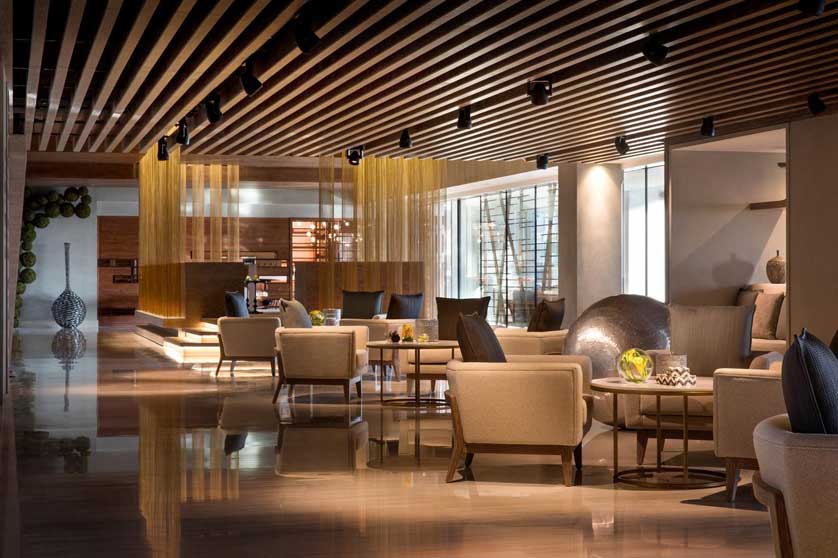
Places to stay in Shiraz include the five star Zandiyeh Hotel, the popular Niayesh Boutique Hotel, the modern Sasan Hotel and the four star Elysee Hotel.

Access - Getting to Shiraz
There are flights to a number of domestic destinations from Shiraz including Tehran, Ahvaz, Kish, Mashhad, and Bandar-e Abbas. There are also international flights to Doha, Bahrain, Kuwait and Dubai.
There are buses to many destinations including Tehran (approx. 15 hours), Hamadan (15 hours), Kermanshah (18 hours), Tabriz (24 hours) and Yazd (7 hours).

Shiraz Metro
There is a metro in Shiraz. Line one with 20 stations opened in 2014. Eventually it is planned to have 6 lines. Line 1 runs 24.5 km with 19 underground stations and 1 surface station.
The list of stations on Line 1 is Shahid Dastgheyb (Shiraz Airport), Shahid Doran, Forsat-e Shirazi, Janbazan, Ghadir, Razi, Fazilat, Kaveh, Valiasr, Vakilorroaya. Zandiyeh, Imam Hossein, Namazi, Shahid Avini, Shahid Motahari, Qasrodasht, Shahed, Mirza-ye Shirazi, Shari'ati and Ehsan.
Map of Shiraz
David Shariatmadari


Book Hotel Accommodation in Iran
Hotels in Iran - Booking.com
Hotels in Tehran - Booking.com
Hotels in Esfahan - Booking.com
Hotels in Kish - Booking.com
Hotels near Imam Khomeini International Airport (Mahmudabad)
Hotels in Mashhad - Booking.com
Hotels in Shiraz - Booking.com
Hotels in Yazd - Booking.com
Book Hotel Accommodation in The Middle East
Hotels in Dubai & UAE - Agoda
Hotels in Egypt - Agoda
Hotels in Jordan - Agoda
Hotels in Kuwait - Agoda
Hotels in Lebanon - Agoda
Hotels in Qatar - Agoda
Hotels in Saudi Arabia - Agoda