Iranian Food: What to Expect at a Sofreh at Mehmooni (Dining)
Mariam Noronha
Sofreh, the Persian spread at meal times in an Iranian home is a riot of color, taste and aroma. Here are some essentials of this inherent aspect of Persian culture and tradition.
Iranians are connoisseurs of food and a visit to any Iranian home is enough to let you know just how much of a role food plays in the Iranian way of life.
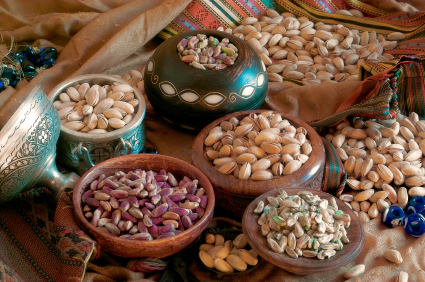
Salted nuts, cookies, cakes, chocolates and sweets like Sohaan and Gez are always served to visitors. Fruits are another all time favorite and if you do happen to be there at meal time this is what you would expect to find at the sofreh.
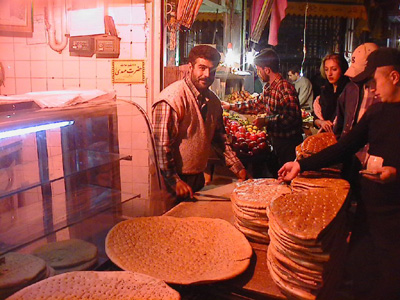
Bread or Noon, as it is known colloquially, is a staple at the sofreh. Iranians love their bread freshly baked and at meal times you will find people queuing up outside the nearest noonooyi bakery to get their bread. Persian breads that you will commonly find include Noon-e Barbari, Noon-e Sangak and Lavash.
Noon-e Barbari is fluffy long bread which is thick and delicious. Similar to Italian foccacia in texture and taste, this bread is baked in the oven and is crusty on the outside and soft on the inside. Lavash is very flat, wide bread, almost wafer like but really soft. It is lighter in color and different in taste. Most people roll it up with feta cheese in a dish called Naan-o Panir.
Noon-e-Sangak is traditional long bread made with little tiny stones in a hot, deep oven. Its name Sangak comes from: sang meaning stone, so it is literally Stone Bread. It is in between Barbari and Lavash in thickness and is much heavier. Noon-e-Sangak is often used on the Sofreh Aghd (Persian wedding feast) and is decorated elaborately to congratulate the couple as well as on special occasions such as New Year's Eve (Noruz).
Fresh herbs and feta cheese to eat with the bread; simply slather bread with cheese and sprinkle some fresh herbs to create the Iranian favorite Noon-o-Panir.
Yogurt or mast plain or mixed with spinach, grated cucumber and mint or seasoned with garlic (mast-o-moseer).
Butter with some honey or sugar
Sliced cucumbers, radish, carrots and peeled, steamed beets
Various dips, Persian pickles, relishes, jams
The main course could comprise one or many of these dishes: khormeh sabzi (meat cooked with spinach and other leafy vegetables), aash-e-reshteh (noodle soup), chelo kebab (rice with kebabs), chelo murgh (rice with chicken), joojeh kebab and aab-goosht (mutton cooked in light gravy with lentils).
Tadik (rice or bread layered with saffron and fat placed at the bottom of the vessel cooked to golden brown) is a huge favorite.