Famous Iranians - Ghiyath al-Din Abu'l-Fath Umar ibn Ibrahim Al-Nishapuri al-Khayyami (1048-1131)
- 11th-12th century Persian poet, philosopher, mathematician, astronomer and physician
- Best known to the West as the author of Rubaiyat of Omar Khayyam
- Lived most of his life and died in the city of Nishapur in eastern Iran
- Genius on a par with Leonardo da Vinci
Life
Omar Khayyam was born in Neishabur (Nishapur), north-eastern Iran, which was at the time, a Seljuk capital in the region of Khorasan.
Supposedly the son of a tent-maker, al-khayyami in Arabic means "tent maker" Omar Khayyam spent some of his childhood in Balkh in Afghanistan where he studied under some of the great teachers of his age.
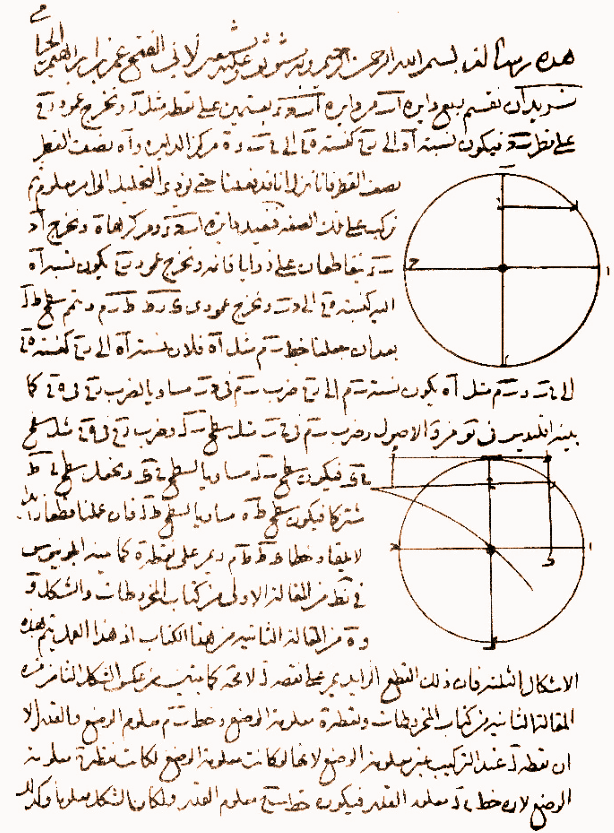
Omar Khayyam was best known in his own day as a mathematician, particularly in the field of geometric algebra. His Treatise on Demonstration of Problems of Algebra is a seminal text on the subject as Khayyam built on the mathematical theories of Euclid and the ancient Indian scholars.
Khayyam's work in mathematics went hand in hand with his study of astronomy. Invited to Esfahan by a royal decree to help build an observatory, he accurately calculated the length of a year and his astronomical calculations form the basis of the modern Iranian calendar. It was under the patronage of the royal court in Esfahan that much of Khayyam's greatest work was written.
Rubaiyat
However, it is Khayyam's poetry, and through it his philosophy, that is most widely-known outside his homeland. Khayyam wrote around one thousand four-line verses or quatrains (roba iyat), which were, rather loosely, translated into English as the Rubaiyat of Omar Khayyam by the Victorian poet and scholar Edward FitzGerald (1809-1883). Other more literal translations of the poems are now available. However, it is virtually impossible to say that all the verses attributed to Khayyam in FitzGerald's translation are, indeed, his own work.
The general themes and meanings of Khayyam's poetry have been deeply debated. He acknowledges the brevity of life and the need for worldly action and enjoyment; but was he an skeptic with no belief in the afterlife, or a Sufi, who looks to discover God through intuition rather than reason?
Edward FitzGerald's Translation of the Rubaiyat
Edward FitzGerald's translation may paint Khayyam as a hedonist wine-lover in parts but there is much more to Khayyam's world view than his translated poetry. A follower and teacher of the philosophy of Ibn Sina aka Avicenna (981-1037), an earlier Persian thinker and polymath, Khayyam's thought was concerned with the existential questions of life, death and fate. Serious themes that are hidden, but nonetheless addressed in the quasi-comic verse of the Rubaiyat.